


First Build Block of the new AchievR. One problem, one fix you can run tonight. Every Thursday from now on.
For about two years I had a ready answer when anyone asked about my projects: “I’d love to work more on them, but with a full-time job I don’t have time.”
One evening, I checked the screen time on my phone. 2 hours 51 minutes.
That day I worked 8 hours, commuted, made dinner, and still found almost 3 hours for a six-inch screen.
I had a problem. Not with time. With an identity, with priorities.
More or less, I was aware of it.
“I don’t have time” is an excuse so easy to back up every day that it was effectively alleviating my disappointment in myself, and as days went by, it was becoming a part of my identity, and there was no progress to see.
Every day you're rolling one of two snowballs.
"I don't have time,"
or
"15 minutes today."
Both grow. One turns into a year of excuses. The other turns into a finished thing.
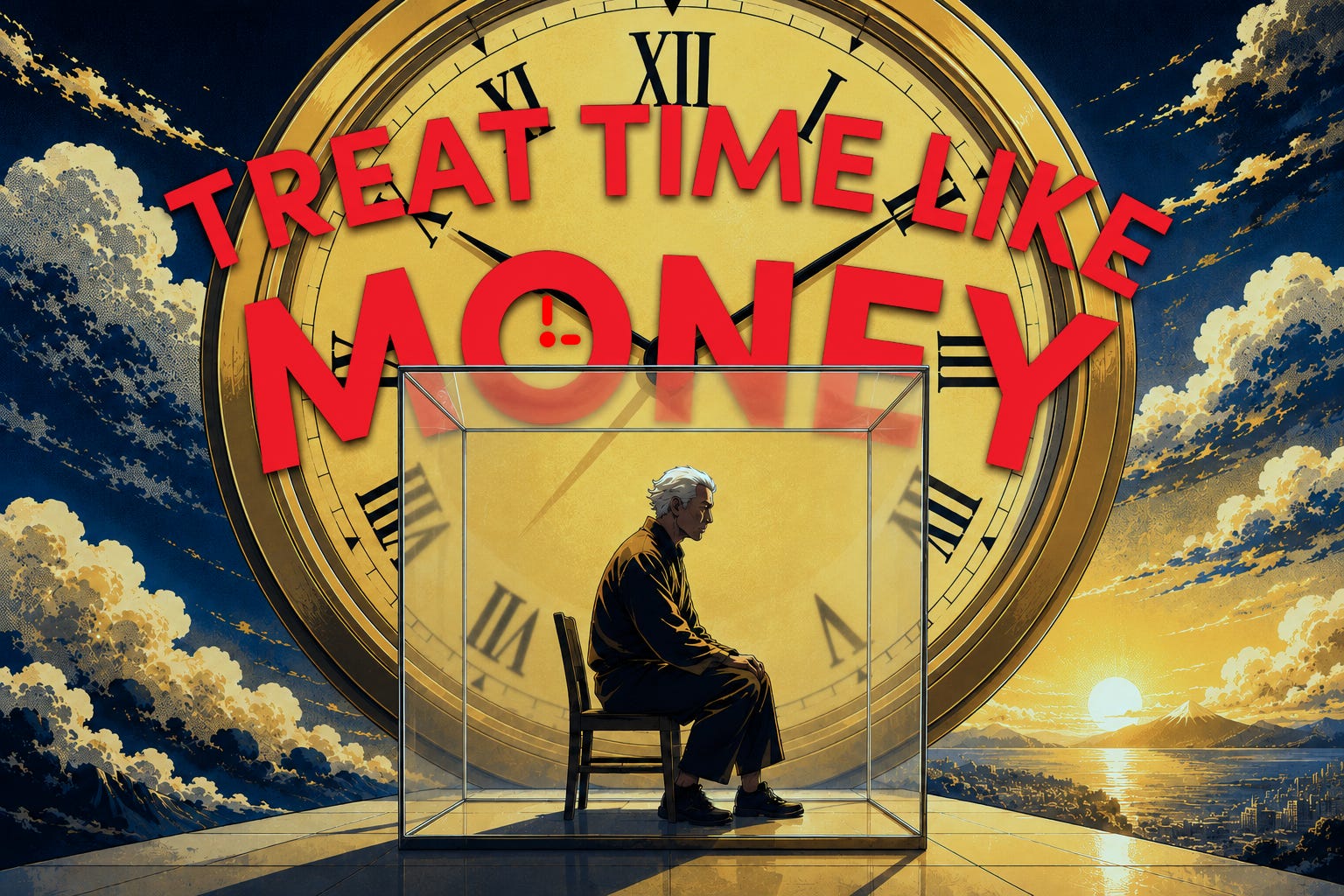
The rent gets paid first
Look at how money behaves.
You never say “I don’t have money for rent.” Rent leaves first, automatically, before you decide anything. Then the phone bill, then the subscriptions. Whatever survives becomes “money I have.”
Hours move the same way.
Sleep, job, commute, dinner, shower (hopefully), those get paid first without negotiation.
Then everything you consider part of you takes its cut: gym if you work out, the walk if you have a dog.
Nobody “finds time” to walk the dog. The dog gets walked because that’s who you are, a person who loves their dog (see priority here).
Your project isn’t on the rent list. That’s the whole problem. It lives off leftovers, and leftovers at 21:30 look like a couch and a glowing rectangle.
What the sentence really says
Translate “I don’t have time” honestly, and you get: this is not part of who I am yet, but I want it to be.
That’s why the sentence is so comfortable. It points at the calendar, so nothing is your fault and nothing has to change.
The calendar is a great alibi, it never defends itself.
“Instead of saying ‘I don’t have time,’ try saying ‘it’s not a priority.’” — Laura Vanderkam
Stings, right? Mine stung.
I could say “watching another series is not a priority” without blinking, but “my project is not a priority” felt like swallowing a coin.
Good. That sting is useful information. It means the project matters and the identity hasn’t caught up yet.
I remember my call center sales job. If a prospect said:
“I don’t have time for this,”
my coach’s favorite answer was simple but effective:
“Show me your calendar.”
If you’re new: start with the Pathfinder. Free, and it answers the first real question: whether your project deserves your two hours.
Click the link or get it delivered in the welcome email:
If it was my priority, I would find time for it. As I don’t, it means it isn’t
It’s not a logical argument.
You may have a “priority” of quitting smoking, but you’ll always find a time to get cigarettes and go for a smoke break, even if the shop is not along your commute and you’re already late.
Finding time doesn’t show your priorities but your habits.
And breaking old habit patterns won’t be easy.
There’s that primal part of your brain that won’t let you change for the better, even though you consciously want to.
Think of it as (with all due respect) a boomer who doesn’t understand how today’s world works. The world changed, it didn’t. It will keep pulling you back to the old and comfortable, no matter what you consciously decided your priority is.
But my calendar really is full
Some seasons are brutal. Overtime, small kids, a commute that eats two hours a day.
Then, I ask myself: where does the discretionary hour go? Even the worst week has one, and wherever it flows, that’s what your current identity considers rent.
No shame in it. The couch won automatically, because your project never entered the auction.
And yes, the hour you do have shows up with a brain that already solved 8 hours of someone else’s problems.
That’s why the answer is not four hours.
You don’t need four hours. You need one small block that’s claimed, not found, sized for your worst day.
Hit reply and tell me what you’re building after work. One line is enough. I read every reply, and it decides what I write next Thursday.
Where it goes wrong
1. You hunt for leftovers
“I’ll work on it when things calm down.” Things never calm down, and leftover time doesn’t exist.
“I’ll catch up on the weekend” is the same lie. The weekend never catches anything.
The fix: the block goes in the calendar up front, like rent, before the week starts eating.
2. You claim too much. Zero to two hours every night sounds good, dies quick
The fix: embarrassingly small. Twenty minutes that survive your worst day beat two hours that need your best one.
3. You keep saying the sentence. Every repeat is a vote for the old identity, and votes add up
The fix is step 3 below.
Try this now
Run the audit. Open your phone’s screen time right now and write down yesterday’s number. You can see there the amount spent in specific apps per week.
Put rent in the calendar. One short block tomorrow, whatever fits your day. Name the event “Rent.” Twenty minutes, paid first, non-negotiable.
Swap the words for a week. Every time “I don’t have time” shows up, say the honest version instead: “it’s not my priority right now.”
If you can say that about your project and feel nothing, shelve the project with a clean conscience.
If it burns, say the new sentence: “I build after work.” Out loud. That’s the vote that counts.
You’ll never find that “more time.” “More time” is like the Yeti—everyone’s heard of it, but no one’s ever seen it.
Put the project on the rent list and pay it first. Owned, not found!
P.S. Want every deep dive plus the Builder Paths through the archive? That's the Hyper Achiever tier. $79 a year. Cheaper than the course you didn't finish!
Even cheaper now with a discount for new after work builders:
Any suggestions? Give me feedback here:
To read next:
