


For about two years I told people: “I’d love to work more on my projects, but I don’t have time.”
Then one evening I looked at my screen time. 2h51m. That was after an 8-hour workday, the commute and dinner.
I had time. I had nearly three hours, and I spent it on my phone.
I had a fancy Notion to-do page for tasks. Clockify for tracking sessions. An Excel sheet with a graph of every work session. Goals taped above my monitor.
I was a time management nerd who didn’t move forward. This post is about why, and the half-hour weekly fix that finally changed what I do first in a block.
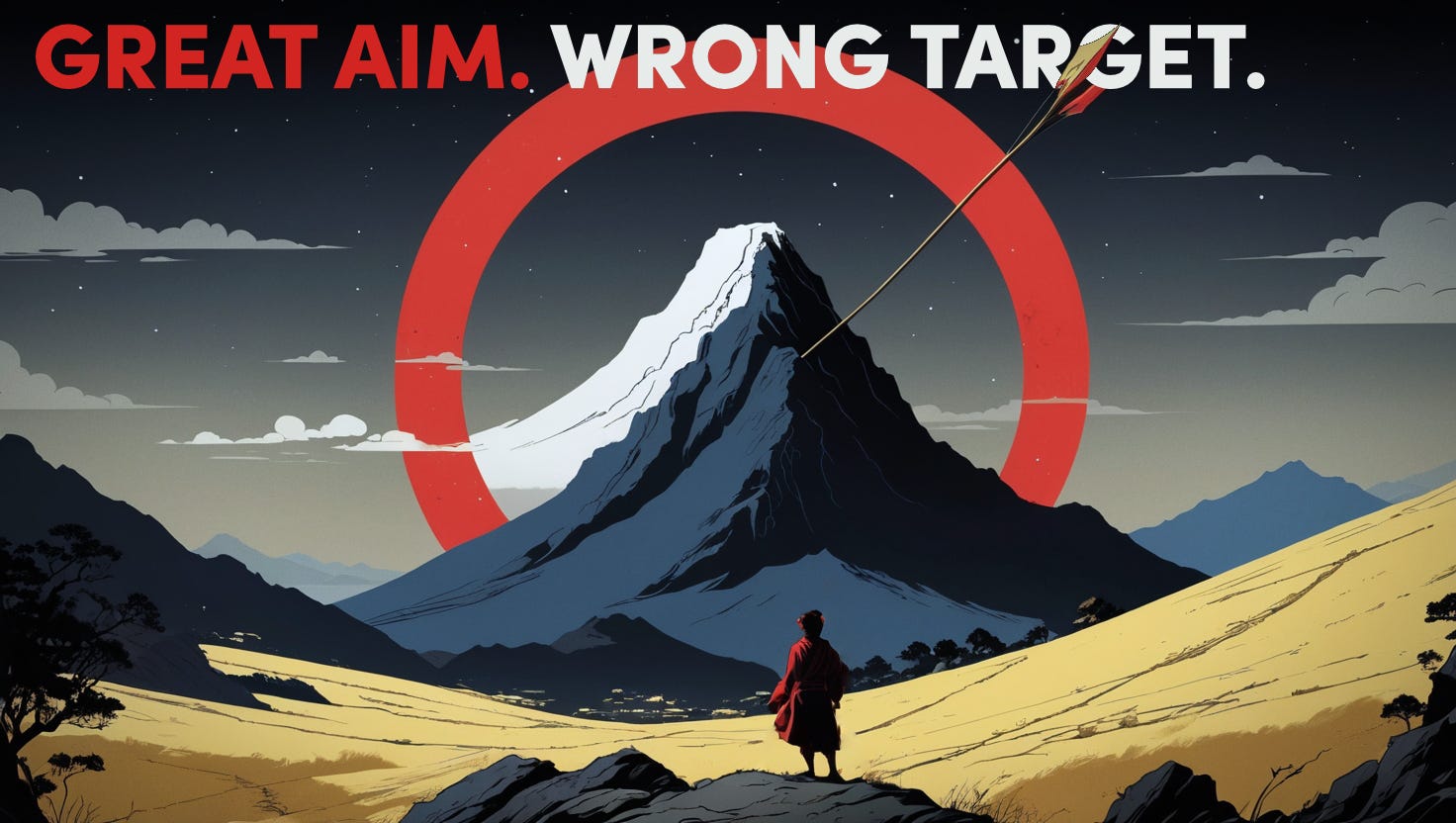
Techniques answer the wrong question
Pomodoro. Time blocking. The 2-minute rule. Batching. Eat the frog. Good tools, all of them.
Look at what they all do. They tell you HOW to work through the list, and none of them tell you WHAT should be on top of it.
They take your list as given, the same way a GPS takes your destination as given and happily drives you to the wrong city in the fastest possible way.
If the list is wrong, a perfect technique gives you a perfect execution of the wrong thing. I know, because I’ve done it. One hour a day of Instagram reels, tracked, scheduled, consistent. Zero results. Great discipline, wrong f*cking target.
A timer doesn’t care what you feed it. It just counts. Have you ever looked at your own tracker and realized it’s a very accurate record of how you avoided?
What your tired brain does with a list
Workday is over. You sit down and open the list.
Nine tasks. They all look the same size on the screen. Same checkbox, same font.
What does a tired brain do? It doesn’t rank by value, because ranking by value takes energy you spent on the job already. It ranks by effort and mood, the loudest thing on the screen wins. So you get this:
I open the list → everything looks equal → I pick the easiest one → I finish it, nice little hit → block is over → the thing that matters didn’t move.
When there are a few ways to reach the same goal, your brain drifts to the one that costs the least.
After 8 hours at work, your goal for the evening quietly changes from “launch the product” to “feel like I did something tonight”. The easiest checkbox gets you there for almost zero energy. So the easiest checkbox wins, the evening. (Thanks, brain.)
The only question that matters
Before the method, the idea.
A priority is not something important. Everything on your list is important, that’s why it’s on your list.
A priority is the thing that moves your ONE current outcome.
Not “Get me more clients.” Not “build my business.” Those are directions, and you can’t rank tasks against a direction, every task looks a little bit like it.
You need a sentence with an end. Something that is either done or not done by a date.
If you don’t have one, my free Pathfinder Goal-Setting Template walks you through writing it.
Claim it in the welcome email or in resource library, takes 10 minutes. Most people skip this step and go straight to tools.
Duh? That’s exactly the mistake above.
The Resource Library: Where Hyper Achievers Start

You don’t have time after work to dig through 100+ posts for the one framework you half-remember. So I put everything usable in one place, and built routes through it.
The 4-Step Priority Cut
This is the method. Run it once a week, rested, never during the block.
Step 1. Write the outcome. One sentence, done or not done, with a date.
“Product page live by November 30.” Yes!
“Work on my product.” No :(
Step 2. Dump the list. Everything you could do. Don’t judge yet. Brain out, on paper.
Timer for 18 minutes and you don’t stop until it goes off. Empty head? Force yourself. Can’t do it? Will you be able to achieve your goals if you can’t do this?
Why on paper? Unfinished tasks keep pinging your brain in the background. Making a concrete plan for an unfinished goal is enough to stop the pinging. You don’t have to do the task. You just have to decide where it goes, and that’s what the next two steps do.
Step 3. Ask three questions per item.
Does this directly move the outcome?
If I skip it this week, will the date slip?
Does it need to be done now, or only sometime?
Step 4. Sort into three piles.
Core. Yes, yes, yes. Max 2 items. This goes into your first block, before anything else.
Support. It helps, but the date wouldn’t slip without it. Only after Core is done.
Not now. Fails the questions. It goes on a separate list that you look at once a month, not daily. Think of it as a parking lot. You’re postponing those on purpose, so no guilt.
Four steps, around half an hour. The best slot for it is your Sunday Review
Worked example, start to finish
Made-up example. Say you’re building a small digital product after your job.
Outcome: Product page live by November 30.
The dump:
Design the logo
Write the product description
Research 3 more competitors
Make the cover mockup
Set up the welcome email
Reorganize the Notion workspace
Post on Twitter every day
Watch that course on pricing
Answer DMs
Nine items. Now the questions.
Write the product description. Moves the outcome? Yes. Date slips without it? Yes, no page without text. Needs to be now? Yes. → Core.
Make the cover mockup. Moves it? Yes. Slips without it? Kind of, the page looks bad but it exists. → Support.
Set up the welcome email. Moves it? Not the page. Slips? No. → Not now. (It matters after launch. Not before.)
Design the logo. Moves it? No. Slips? No. → Not now.
Research 3 more competitors. Moves it? No, you already know enough to write the page. Slips? No. → Not now.
Reorganize Notion. Not now. Obviously. It feels like work and it’s mostly bullshit when the page doesn’t exist yet.
Twitter, course, DMs. Not now. DMs are the only one with a real answer, and you can give that a 15-minute slot after the block.
Result: ONE Core item and ONE Support item out of nine.
Do you keep watching people who started after you ship their projects, while yours are still sitting in a folder? Then The Builder Identity Install is for you:
What a priority sounds like
Quick contrast. Say these out loud and you’ll hear which one you’re doing.
Priority sounds like:
“This is the one thing that has to exist by the date.”
“If I only get one thing done this week, it’s this.”
“I’m not doing the logo until the page is live.”
Busy sounds like:
“I’ll just knock out a few small things first.”
“Let me get organized before I start.”
“It all needs to be done anyway.”
Using visible busyness as a stand-in for real progress is the same move your brain pulls off more often than….
Everything is urgent!
Real objection, real answer. “My life has fires. Job, family, admin. I can’t just pick one thing.”
Are you familiar with Eisenhower matrix?
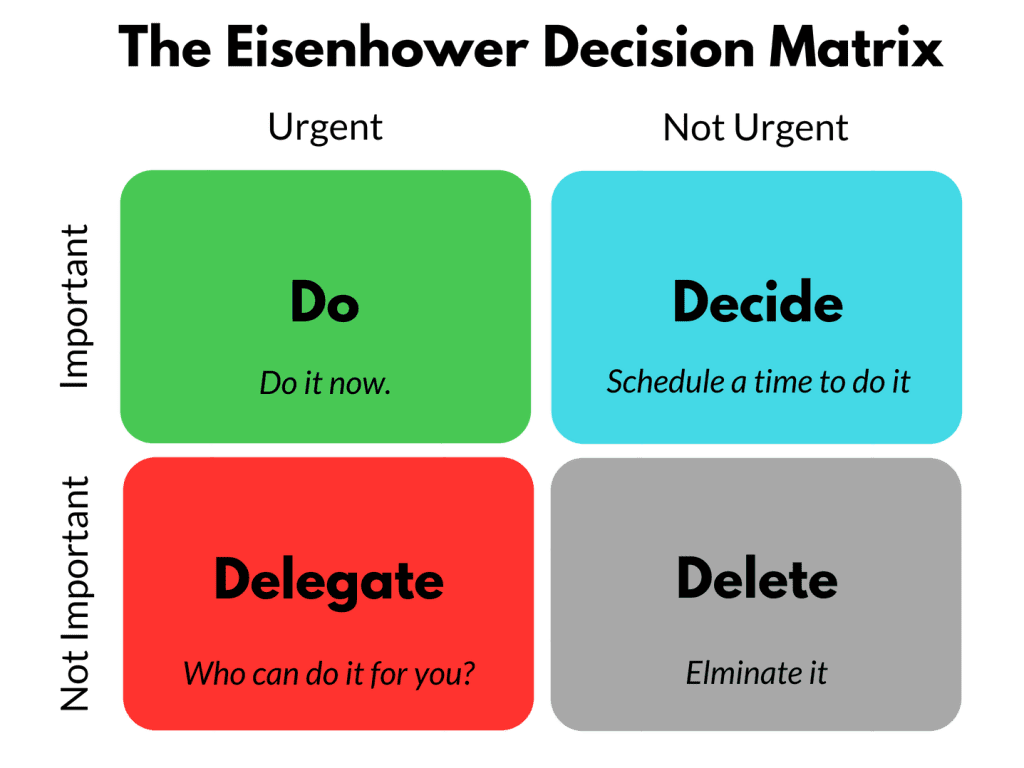
Fires go in urgent + important. Most notifications go in urgent + not important. And the box he said matters most is: important, but NOT urgent.
Guess where your project lives? Forever. Nobody calls you after work asking where your product page is.
Your boss has deadlines, your family has faces, your admin has fines. Your project has only you.
That’s why the outcome has a date. It’s the closest a side project gets to urgent.
So give the project the job’s treatment. Not a whole day. One block. Ranked first inside that block, because the block is the only place you control.
Wait, what if I pick wrong?
You will, sometimes. That’s fine.
An outcome with a 30-day end is cheap to change.
A wrong pick teaches you something: the page went live and nobody cared, or the description was harder than expected. That’s information.
An unranked list teaches you nothing. You spend a month busy and you can’t tell what worked.
Start tonight
Write ONE outcome with a date. One sentence. 5 minutes.
Set an 18-minute timer, dump the list, then cut it into three piles.
Put the Core item in your calendar as the first thing in your next block.
Your tools are fine. Keep Habitica, keep Clockify, keep the graph. Just point them at ONE thing, and sit your ass in the chair until the timer rings!
New here? AchievR is one post a week for people with a real job and a project for freedom.
Identity, systems, consistency, output, money: things you can use the same night.
The welcome email comes with the Pathfinder Template: a free starting point for picking a project worth your hours.
P.S. Want every framework, Builder Paths and everything else in resource library? That's the Hyper Achiever tier.
$7.99 a month or $79 a year. Cheaper than a coffee or the course you didn’t finish.
To read next:

The GPS line landed — a perfect technique driving you to the wrong city is exactly how the five years before retirement can go. The “one outcome with a date” test is a good one; without a date, everything on the list just looks equally important.